Why Everyone Else's Art Process Looks So Much Better Than Yours

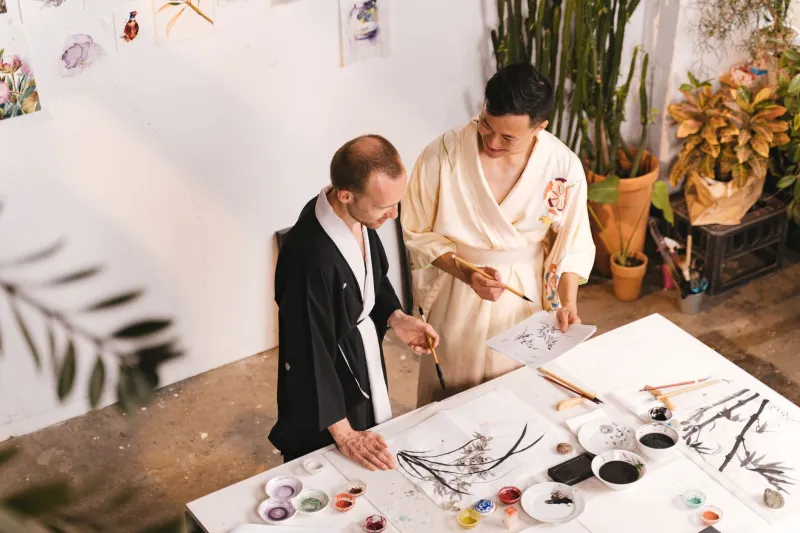
Photo by Photo by Vitaly Gariev on Unsplash on Unsplash
The Reel That Ruined Your Tuesday
You were having a perfectly fine creative session. Sketchbook open, coffee warm, vibes decent. Then you picked up your phone for "just a second" and landed on a time-lapse of some artist in a sun-drenched studio laying down the most effortless, confident brushstrokes you've ever seen. The whole thing was set to a lo-fi track. The result was stunning. The process looked easy.
And just like that, your Tuesday was kind of over.
This is the comparison trap in its most modern form—not the old-school jealousy of seeing someone's finished work in a gallery, but something sneakier. It's the behind-the-scenes reel. The process video. The "come create with me" livestream. All of it framed as inspiration, community, transparency. And a lot of it genuinely is those things. But there's a psychological side effect nobody's really talking about, and it's doing real damage to a lot of creative people.
What Your Brain Actually Does With That Content
Here's the thing about watching someone else's process: your brain doesn't file it under "interesting example." It files it under comparison data. Automatically. Without asking you.
Psychologists call this social comparison theory—the idea that humans naturally evaluate themselves by measuring against others. It's baked into us. When we were navigating small communities and needed to gauge our standing, this was useful. In 2024, when we have access to the highlight reels of thousands of artists across every platform, it becomes a problem.
And process content is especially tricky because it feels like it should be the equalizer. It's not the polished final product—it's the raw, real stuff. Except it isn't, really. Almost every process video is edited. The mistakes get cut. The hour of staring at a blank canvas doesn't make it in. The version where the artist hated everything and almost quit? Gone. What you're watching is a curated performance of creative confidence, dressed up as authenticity.
Your messy, uncertain, nonlinear actual process doesn't stand a chance against that.
The Originality Tax
Here's where it gets more serious than just feeling bad about yourself. Constant consumption of other people's processes doesn't just affect your confidence—it starts to affect your work.
When you spend a lot of time watching how someone else solves a creative problem, your brain starts to absorb their solutions as defaults. You reach for their color choices, their compositional instincts, their workflow rhythms. Not because you're copying intentionally, but because you've been marinating in their approach. The more process content you consume, the more you risk outsourcing your creative decision-making to a crowd of people who aren't you.
There's a reason a lot of artists talk about going through phases where everything they made looked like whoever they were obsessing over. Influence is real and it's not always bad—but there's a difference between being inspired by someone's finished work and essentially apprenticing yourself to their process every evening while you scroll.
The Platform Isn't Neutral
It's also worth naming the fact that the platforms serving you this content aren't doing it for your creative development. They're doing it because process videos perform well. They get saves, shares, comments. The algorithm rewards the artist who posts consistently, who has a recognizable aesthetic, who seems productive and prolific. That means what surfaces in your feed is specifically the content optimized to make you feel like you should be doing more, faster, better.
You are not watching a representative sample of how artists actually work. You are watching the content that won a virality contest.
How to Watch Without Losing Yourself
None of this means you should delete every art account you follow and live in a content-free cave. Inspiration is real. Community is real. Watching a technique you've never tried can genuinely open doors. The goal isn't abstinence—it's intention.
A few things that actually help:
Create before you consume. Make this a rule, even a loose one. Do your own work first, before you open any apps. Even 20 minutes. When you've already put something of yourself on the page, you're less likely to be destabilized by what you see afterward.
Notice the edit. Remind yourself, actively and often, that you're watching a highlight reel. Not because you're bitter, but because it's just true. The artist whose process looks effortless has bad days too. They just don't post those.
Curate for craft, not comparison. Follow accounts that teach you something specific—a technique, a material, a business approach—rather than accounts that just make you feel vaguely inadequate. There's a difference between "this person's work expands what I think is possible" and "this person makes me feel like I'm behind."
Give your own process some privacy. Not everything needs to be documented and shared. Some of your messiest, most generative creative sessions should just be yours. The pressure to make your process content-worthy can actually deform the process itself.
Your Weird Way Is the Point
Here's the real thing: the fact that your process doesn't look like a lo-fi time-lapse isn't a problem. It's probably a feature. The artists who develop the most distinct voices are almost always the ones who figured out their own weird way of working and committed to it, rather than constantly benchmarking against what looked right on a screen.
Your creative process is not supposed to be photogenic. It's supposed to work—for you, in your space, with your brain. That's the only metric that actually matters.
So next time a process video starts to make you feel small, try treating it like what it is: one person's edited version of one approach to one kind of work. Interesting, maybe. But not a standard. Definitely not yours.