You Are Not Your Aesthetic: Escaping the Personal Brand Cage You Built
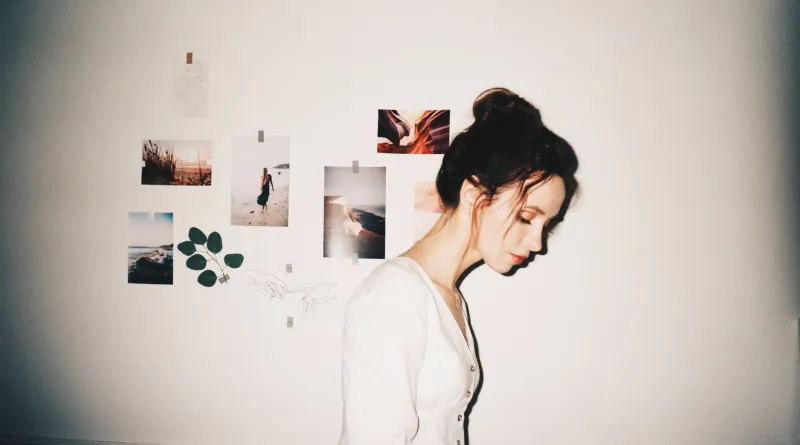
There's a moment a lot of creators describe — usually somewhere around 18 months into building their online presence — where they're standing in a coffee shop, about to order a latte, and they think: Would my audience like this cup? Should I photograph it? Does this fit my palette?
That moment is a warning sign.
Not because photographing your coffee is inherently wrong. But because something has shifted — subtly, almost invisibly — from sharing your life to performing it. And that shift, left unchecked, has a way of swallowing people whole.
The Promise That Got You Here
The pitch for personal branding is genuinely appealing. Show up as yourself. Be authentic. Let people in, and they'll stick around. For artists, photographers, writers, and designers especially, that message resonates hard. You already believe your perspective is your most valuable asset — so building a brand around it feels natural. Logical, even.
And in the early days, it usually works. You post work you love, share stories that matter to you, and people connect. The feedback loop is intoxicating. You figure out what lands, what gets saved, what earns a DM that says this really got me.
So you do more of that. You narrow in. You develop a "voice," a visual identity, a consistent point of view. You become, in the language of the internet, recognizable.
Here's the thing nobody warns you about: recognizable is a cage with very comfortable padding.
When Curation Becomes Compression
Psychologists who study identity and self-presentation talk about something called self-concept clarity — basically, how well-defined and consistent your sense of self is. A strong personal brand can actually undermine this, because it locks you into a fixed version of yourself at a particular moment in time.
You become the person who makes moody film photography and writes about grief and always wears vintage. Or the designer who's relentlessly optimistic and uses a very specific shade of terracotta in literally everything. Or the artist who is always, always talking about the process.
And then one day you want to make something bright and chaotic. Or you're genuinely happy and don't have a single thing to say about grief. Or you're deeply bored of your own process and just want to watch TV.
But the audience expects the other thing. And you've trained yourself — really, truly trained yourself — to deliver it.
This is what therapists who work with creators sometimes call the persona trap: the version of you that exists for public consumption starts to take up so much cognitive and emotional real estate that the private, unperformed self gets crowded out. You share everything and somehow feel invisible. You're more visible than ever, and lonelier than you've been in years.
The Paradox of Radical Transparency
Social media culture has a seductive answer to this problem: just share more. Be more vulnerable. Show the messy studio, the failed drafts, the bad days. Authenticity, we're told, is the antidote to performance.
But here's the paradox — radical transparency is still a performance. When every struggle becomes content, you're not escaping the brand, you're expanding it. The "messy" version of you becomes just another aesthetic. Your vulnerability becomes a product.
Illustrator and educator Lisa Congdon has talked openly about learning to distinguish between what she shares because it genuinely serves her community and what she shares because she's anxious about staying relevant. That distinction — why am I posting this, really? — is harder to answer honestly than it sounds.
Finding the Edges of Yourself Again
So what do you actually do about it? Here are a few things that seem to genuinely help:
Create something with no audience in mind. This sounds obvious, but actually do it. Make a piece of work — a painting, a playlist, a short story, whatever — and commit in advance to never sharing it. Not as a draft, not as a behind-the-scenes. Just for you. Notice how that changes what you make.
Audit your "off-brand" impulses. Keep a running list of things you want to explore, try, or share that feel inconsistent with your current brand. Don't act on them yet — just collect them. After a few weeks, look at the list. That's probably closer to who you actually are right now than your feed is.
Set content-free zones in your life. Some experiences don't get photographed. Some conversations don't get turned into captions. Some days just happen without documentation. This isn't about being precious — it's about keeping a part of your life that belongs only to you, which paradoxically makes the parts you do share feel more genuine.
Let yourself evolve publicly, even if it's awkward. Musician Mitski has repeatedly reinvented her sound and image in ways that confused some fans and delighted others. She didn't ask permission. She didn't write a lengthy explanation post. She just changed. Your audience is more adaptable than your anxiety tells you they are.
The Brand Serves the Work, Not the Other Way Around
At its best, a personal brand is just a way of saying: here's who I am, here's what I make, here's why it might matter to you. It's a handshake, not a contract.
The trouble starts when you forget that. When the brand stops being a description of your creative life and starts being a prescription for it.
You built the thing. You can rebuild it. You can let it get messier, more contradictory, more honest. Not because that's better content strategy — though it often is — but because you're a person, not a product, and you deserve to take up more space than any aesthetic can hold.
The work you're most afraid to share because it doesn't fit? That's probably the most interesting thing you've made in months.
Start there.