In Defense of Staring at the Ceiling: How Boredom Might Be Your Sharpest Creative Instrument
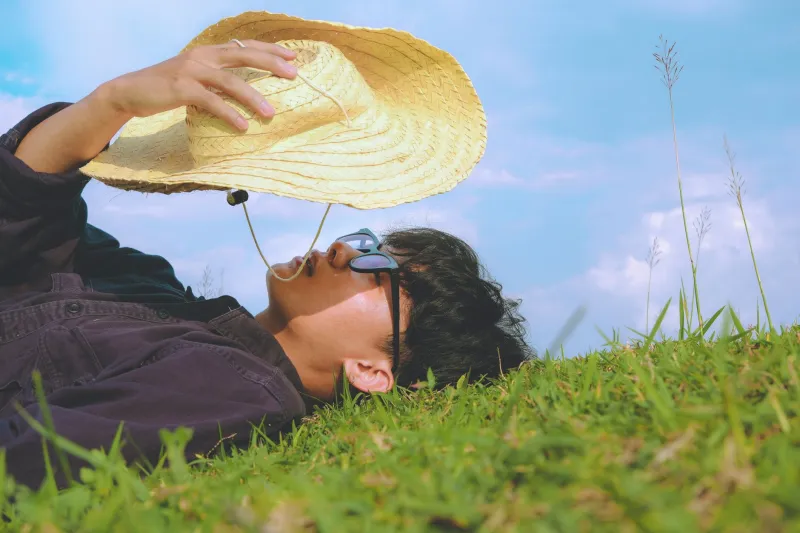
Here's a confession: some of the best ideas I've ever heard artists describe came to them in the shower, on a long drive with the radio off, or during a particularly uneventful afternoon when nothing was going on and they were, frankly, kind of bored.
Not inspired. Not in flow state. Not executing a morning routine designed by a Silicon Valley productivity influencer. Just... bored.
We've spent the last decade treating boredom like a bug in the human operating system — something to be patched immediately with a podcast, a scroll, a notification. But a growing body of research, backed up by the lived experience of working artists across every discipline, suggests we've been getting this exactly backwards.
Boredom might be the most underrated tool in your creative kit. And we've been throwing it in the trash.
What Your Brain Actually Does When Nothing Is Happening
Neuroscientists have a name for the brain activity that kicks in when you're not focused on a specific task: the default mode network, or DMN. For a long time, researchers assumed this was basically the brain idling — background noise while the real work paused.
They were wrong.
The DMN is now understood to be deeply involved in imagination, self-reflection, future planning, and — critically — making unexpected connections between unrelated ideas. It's the neural substrate of the eureka moment. And it activates most powerfully when you're doing something understimulating or nothing at all.
Dr. Sandi Mann, a psychologist at the University of Central Lancashire who's spent years studying boredom, has found that people who are bored before a creative task consistently outperform people who aren't. Not by a little. Significantly. The bored participants generated more creative ideas and more unusual ones.
The mechanism, Mann suggests, is that boredom pushes the mind toward daydreaming — and daydreaming is where associative, nonlinear thinking lives. The kind of thinking that says: what if the painting I'm making isn't about grief at all, what if it's about geography?
Your brain needs idle time to make those leaps. And we've been systematically denying it that time.
The Hustle Narrative and What It Costs You
American creative culture has a complicated relationship with rest. We celebrate the grind. We share studio-at-midnight photos and 5 a.m. work sessions. We wear busyness like a merit badge.
For independent artists and creative professionals especially, this narrative is particularly seductive — and particularly damaging. When you're building something on your own, every hour you're not working can feel like an hour you're falling behind. Boredom doesn't just feel unproductive; it can feel like a moral failure.
But here's what that constant stimulation actually does to your creative output: it keeps you in execution mode. You get better at doing the things you already know how to do. You refine, you optimize, you produce. What you don't do is generate genuinely new directions, unexpected pivots, or the kind of weird left-turn ideas that occasionally become the best work of your career.
Jewelry designer and maker Melanie Abrantes — known for her organic, nature-inspired work — has described her most generative periods as ones where she deliberately stepped away from making. Long walks, time in her garden, afternoons with no agenda. "The ideas that came from that space were different," she's said. "Less about what I already knew how to make and more about what I didn't know yet."
That distinction matters enormously.
Boredom vs. Procrastination: Knowing the Difference
Before you cancel all your commitments and announce you're "doing boredom research," it's worth being honest about a real distinction: productive creative downtime and avoidance procrastination are not the same thing, even though they can look identical from the outside.
Procrastination is usually anxiety-driven. It involves avoiding a specific task because it feels threatening — you're afraid the work won't be good enough, or you don't know where to start, or finishing it means putting it out into the world. The "rest" you're taking isn't restoring you; it's protecting you from discomfort.
Restorative boredom, on the other hand, comes after you've engaged with the work, not instead of it. You've put in real effort, you've hit a genuine wall, and you step away not to escape the work but to let your subconscious keep working without your interference.
The easiest way to tell the difference: how do you feel about the work when you return to it? If you feel relief that you have to face it again, that's probably restorative. If you feel dread, you might be procrastinating — and no amount of ceiling-staring is going to fix that.
Three Experiments Worth Trying
If you want to actually put this into practice rather than just nodding along and then immediately opening Instagram, here are some concrete starting points:
The 20-Minute Nothing Experiment. Once a day for two weeks, set a timer for 20 minutes and do something genuinely low-stimulation — sit outside without your phone, wash dishes without a podcast, take a walk without earbuds. Don't try to think about your work. Just let your mind wander. Keep a small notebook nearby for when it does.
The Pre-Creative Bore. Before your next creative session, spend 15 minutes doing something repetitive and slightly dull: folding laundry, reorganizing a drawer, coloring in a simple coloring book. Then go directly to your work. Notice whether the quality of your initial ideas feels different.
The Analog Afternoon. Once a week, take a half-day with no screens and no agenda. No content consumption, no creation. Just exist. This one is harder than it sounds, and the discomfort you feel in the first hour is actually useful data about how dependent your creative process has become on external stimulation.
Making Space for Nothing in a World That Hates It
The irony of writing an article about the value of doing nothing is not lost here. But the point isn't to turn boredom into another productivity hack — another item on the list of things you're optimizing.
The point is simpler: your creative mind needs unscheduled time. Not as a reward for working hard, not as recovery from burnout, but as a regular, non-negotiable part of how you work. The same way a musician needs silence between notes for music to exist, you need empty space in your days for original ideas to surface.
You don't have to earn the right to stare at the ceiling.
Sometimes, that's exactly where the work is.