Too Much Inspiration Is Killing Your Originality
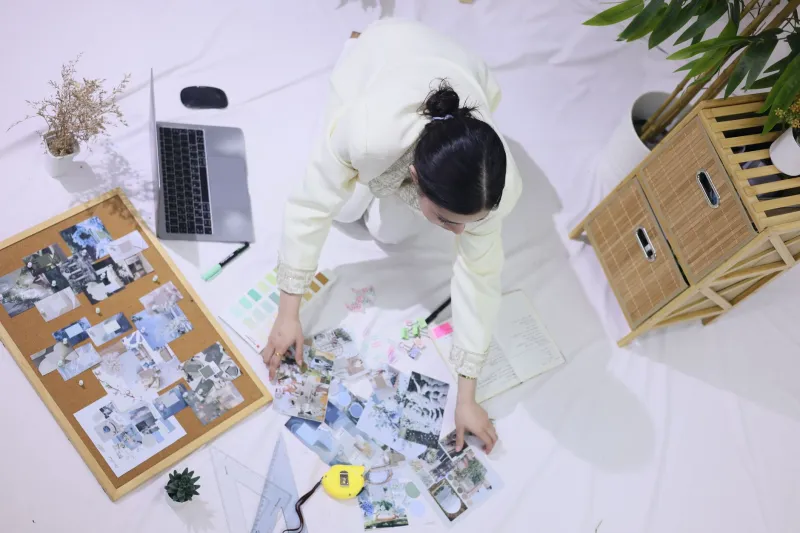
You've got seventeen tabs open. Three mood boards. A saved folder on Instagram that's honestly embarrassing in size. You've done your research, you've studied the field, you know exactly what's resonating with audiences right now — and somehow, the work you're making feels like it could've been made by literally anyone.
Welcome to the comparison trap. It's sneaky, it's well-intentioned, and it might be the single biggest reason your creative work feels generic even when you're genuinely trying to be original.
The Research That's Working Against You
Here's the thing nobody tells you when you're building a creative practice: there's a meaningful difference between gathering reference and absorbing influence. Reference is a tool. Influence, when it comes from the outside in, is a slow override of your own instincts.
When you spend significant time studying what competitors are doing — how they're framing their work, what styles are trending, which aesthetic choices are getting the most engagement — you're essentially programming your creative brain with someone else's output. And your brain is remarkably good at pattern recognition. Too good, actually. It starts to treat those patterns as the template rather than the context.
Psychologists call this phenomenon perceptual assimilation — the tendency to unconsciously align your output with the examples you've been most recently and repeatedly exposed to. In creative work, it shows up as that nagging feeling that your piece looks like something you've seen before, even though you never consciously copied it.
Why "Staying Current" Can Be a Trap
There's cultural pressure in creative industries — especially in the US, where hustle culture and market awareness are practically virtues — to stay plugged in. To know your niche. To study the competition. And look, none of that is inherently bad advice. Understanding your market matters.
But there's a version of that advice that gets twisted into something corrosive: the idea that you should be constantly consuming what others are making in order to make better work yourself. For some people, that feedback loop doesn't sharpen their instincts. It drowns them.
If you've ever started a project with a clear, weird, personal idea and ended up somewhere that looked suspiciously like what's already popular — that's not a coincidence. That's the comparison trap doing exactly what it does.
The Gut Signal You Keep Ignoring
Here's a question worth sitting with: when was the last time you made something based entirely on what felt true to you, with zero reference to what anyone else was doing?
For a lot of creatives, that question lands with a kind of low-grade panic. Because the honest answer is: it's been a while. Maybe a long while.
Your gut instincts about your own work are not noise. They're data. They're the accumulated result of everything you've ever experienced, made, loved, hated, and half-finished at 2am. That's not nothing — that's actually the most original thing you have access to. And it's the thing most easily overwritten when you spend too much time looking outward.
Distinguishing Healthy Reference from Derivative Thinking
So how do you actually tell the difference? A few honest questions to ask yourself before and during any creative project:
Before you look at reference: Can you articulate what you're going for in your own words, without referencing another artist's work? If the only way you can describe your vision is by pointing to someone else's output, that's worth noticing.
While you're working: Are you checking reference to solve a specific technical problem, or are you checking it because you feel uncertain and want reassurance? The former is useful. The latter is where the drift starts.
After a reference session: Does looking at other people's work make you feel more energized about your own direction, or does it make you quietly want to change what you were doing? If it's the latter, that's a signal.
Healthy reference-gathering feels like refueling. Derivative thinking feels like borrowing someone else's compass because you're not sure you trust your own.
A Practical Reset
If you suspect you've been over-indexed on outside influence, here's a simple experiment: for your next project, or even just the next session, go in cold. No mood boards, no competitor research, no scrolling for inspo beforehand. Just you and the work and whatever comes out.
It might feel uncomfortable. It might feel underprepared. The work might even be messier than usual. But somewhere in that mess, you're likely to find something that actually sounds like you — a choice you wouldn't have made if you'd been looking over someone else's shoulder first.
Originality isn't about being completely untouched by the world around you. It's about knowing which parts of the world are actually yours to use. And that's a distinction you can only make when you're honest about where your ideas are actually coming from.
Turn the tabs off. Make the weird thing. See what happens.