The Folder You Never Open Might Be Your Most Important Work

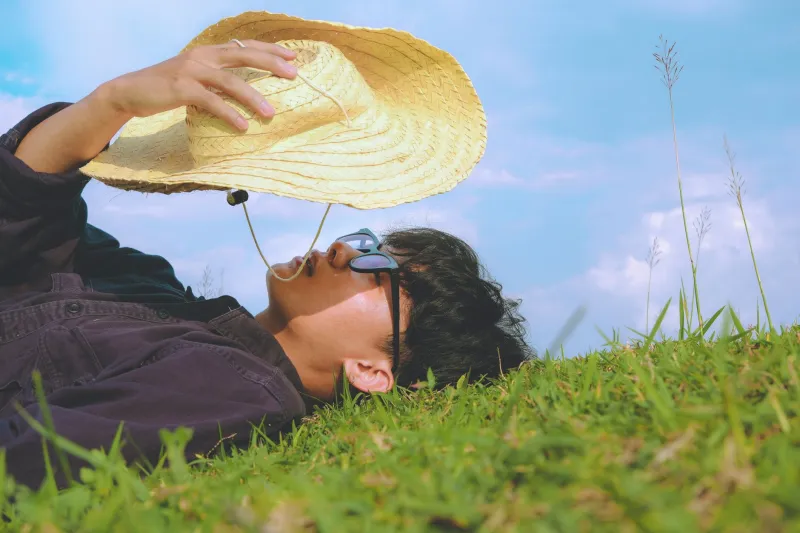
Photo by Photo by Olya P on Unsplash on Unsplash
You probably have a version of it. Maybe it's a folder on your desktop labeled something vague like "old stuff" or "misc" or just a date from three years ago. Maybe it's a sketchbook that lives face-down on a shelf. A voice memo app with 47 recordings you've never replayed. A Google Drive full of documents that end mid-sentence.
Most creatives treat this archive like a junk drawer — stuff you can't quite bring yourself to delete but definitely aren't proud of. But there's a real argument to be made that what's in that folder is more creatively valuable than anything in your public portfolio. Not because it's better, necessarily. Because it's truer.
Why We Bury the Unfinished Stuff
The pressure to only share polished, complete work is everywhere in creative culture. Portfolios are curated. Feeds are edited. Even "behind the scenes" content is usually a carefully staged version of process, not the actual messy reality of making something you're not sure about.
This makes a certain kind of professional sense. You want to put your best foot forward. You want potential clients, collaborators, or collectors to see what you're capable of at your highest level. Nobody's arguing against that.
But somewhere along the way, that professional logic started bleeding into how we evaluate our own work privately. We internalized the portfolio standard and started applying it to everything — including work that was never meant to be a portfolio piece. Work that was exploratory. Experimental. Work that was asking questions rather than providing answers.
When we abandon a project, we usually frame it as a failure. It didn't work. It wasn't good enough. It went somewhere unexpected and we didn't know what to do with it. We close the file and open a new one and try to do better next time. But "didn't work" and "not useful" are two completely different things.
What Abandoned Work Actually Contains
Here's what tends to live in unfinished projects that rarely makes it into finished ones: the moment you changed your mind. The place where you tried something and it surprised you. The version of the idea before you'd figured out how to make it palatable.
Finished work is, almost by definition, resolved. You made a choice, you committed to it, you saw it through. That resolution is part of what makes it presentable. But it's also what makes it a little less raw. The rough edges got sanded. The ambiguity got answered. The weirdness got edited into something more coherent.
Unfinished work still has all of that ambiguity intact. And ambiguity is where creative thinking actually happens. It's the space between what you meant to make and what started appearing on the page or screen or canvas. That space is where your actual aesthetic instincts live — not the ones you've trained yourself to perform, but the ones that show up when you're not monitoring yourself as closely.
Some of the most studied creative archives in American art history are full of exactly this kind of material. The preliminary sketches that show the thinking behind a finished painting. The draft manuscripts where a writer was still figuring out what they were actually trying to say. The unreleased recordings that eventually influenced an entirely different project. The unfinished stuff is often where researchers and critics find the most insight into how a creative mind actually operates.
The Case for Taking Your Own Archive Seriously
You don't have to be a historical figure for your unfinished work to be worth something. In fact, one of the most underrated creative practices you can develop is periodically revisiting your own abandoned material — not to finish it, necessarily, but to see what it was trying to be.
This isn't about salvaging failures. It's about recognizing that "finished" and "valuable" aren't the same metric. An abandoned project that pushed you somewhere uncomfortable, that made you confront a limitation, that started a conversation in your head you're still having — that project did something. It left a mark on your creative thinking even if it never left your hard drive.
There's also a practical dimension here for creatives who are building a body of work professionally. Your unfinished archive is a map of your creative evolution in a way your public portfolio simply can't be. The portfolio shows where you arrived. The archive shows the roads you took and the ones you abandoned and the detours that turned out to be more interesting than the destination.
A Different Way to Think About "Ready"
The standard creative question is: Is this ready to share? It's a useful question, but it's not the only one worth asking. A more interesting question might be: What is this actually doing, and does it need an audience to do it?
Some work is genuinely ready to share and would benefit from an audience. Some work is better as a private reference point — something you return to when you need to remember what you were reaching for before you got practical about it. Some work is a stepping stone that only makes sense in the context of what it led to. And some work is just for you, full stop, and that's not a consolation prize. That's a category.
The pressure to make everything shareable — to turn every creative act into content, every experiment into a post, every process into a story — flattens the actual ecology of creative work. Not everything is meant to be public. Some of the most important things you make are the ones that stay in the folder.
What to Do With It
If you want to start treating your unfinished archive more intentionally, here's a low-stakes starting point: set aside an hour and go through one of those folders or notebooks with the specific goal of not judging the work by whether it's finished or good. Instead, ask what each piece was curious about. What problem was it poking at? What instinct was it following?
You might find work that genuinely surprised you — ideas you forgot you'd had, aesthetic directions you abandoned too quickly, questions you were asking that you're still asking now in different forms. Or you might find a lot of stuff that just didn't pan out. Both are fine. The point is to start seeing your private archive as a resource instead of a record of what didn't make it.
Your portfolio is the work you were confident enough to show. But your archive? That's the work you were brave enough to start.