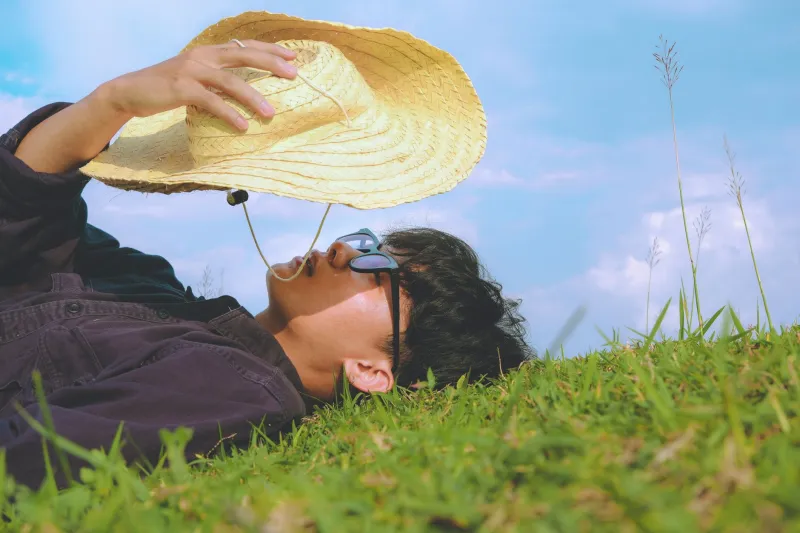
The Private Playground: How Working Artists Protect Their Experimental Work from the World (and Themselves)

Somewhere between the Instagram grid and the portfolio site, a lot of creative risk-taking quietly dies. Not because artists stop wanting to experiment, but because the infrastructure of modern creative life makes experimentation feel expensive. Every sketch could be a post. Every rough draft could be a thread. Every half-baked idea is one accidental screenshot away from being someone else's opinion.
The result is a kind of creative self-censorship that doesn't announce itself. It just shows up as a vague reluctance to try things you're not already good at. A preference for refining over exploring. A career that gets technically tighter while somehow feeling less alive.
The working artists who avoid this trap — the ones who keep surprising themselves and their audiences well into their careers — tend to share one quiet habit: they've built a private creative practice that exists entirely outside the feedback loop. And they protect it with something that sounds almost embarrassingly simple: permission.
The Permission Problem
Permission is a funny thing for adults to need. Most of us spent our twenties trying to convince ourselves we didn't need anyone's approval to make stuff. But the permission that matters most in a creative life isn't social — it's internal.
It's the permission to be bad at something. To make work that doesn't fit your brand. To spend three hours on an experiment that goes nowhere and call it a productive afternoon. To be a beginner again, quietly, without anyone watching.
Without that internal permission, experimentation stalls. You start every new idea with a kind of premature editorial voice in your head — Is this good? Is this me? Would my audience get this? — and that voice kills things before they have a chance to become anything.
The psychological term for this is evaluative threat. When we anticipate judgment (even our own), we narrow our behavior toward the safe and the proven. Creatives who thrive long-term have usually found ways to delay that evaluation — to create a space where the work doesn't have to justify itself yet.
How Established Creatives Actually Do This
Author Neil Gaiman has talked at length about keeping notebooks that are explicitly not for public consumption — spaces where he writes badly on purpose, follows ideas into dead ends, and practices the kind of generative mess that feeds his more polished work. The notebooks aren't the product. They're the engine.
Similarly, many visual artists maintain what they call a "junk drawer" practice — sketchbooks, digital folders, or physical bins filled with work that was never meant to be seen. The point isn't to produce; it's to stay loose. To keep the hand moving and the eye curious even when the commercial work demands precision.
Musicians do this too. Prince was famously prolific in private — he reportedly recorded thousands of songs that never left Paisley Park. Whether or not every track was great wasn't the point. The volume of private output kept him generative, kept him surprising himself, and fed the public work with an energy that purely strategic artists rarely sustain.
The through-line across these examples isn't talent. It's structure. Specifically, it's the structure of a creative practice that has two distinct zones: one that faces outward (the portfolio, the client work, the public-facing output) and one that faces entirely inward.
Building Your Private Practice
So how do you actually create this in your own creative life? A few frameworks that tend to work:
The Throwaway Project Designate a specific project — a sketchbook, a document, a folder on your desktop — that is explicitly labeled as throwaway. Not "rough drafts." Not "works in progress." Throwaway. The naming matters because it changes your relationship to the work before you start. You're not building something. You're just moving.
The Medium Switch One of the most effective ways to give yourself permission to be bad is to work in a medium you don't identify with professionally. If you're a graphic designer, paint badly with watercolors. If you're a photographer, write. The incompetence is the point — it resets your nervous system around making things and reminds you that the beginner state is survivable, even enjoyable.
The Time Limit Give your experimental sessions a hard stop. Thirty minutes. An hour. The constraint does two things: it makes the session feel low-stakes (it's just an hour, not a whole project), and it keeps the internal critic from having time to settle in and redecorate.
The No-Audience Rule This one is strict: the private practice doesn't get shared. Not with your partner, not with your best creative friend, not even as a humble "this is rough but" post. The moment you introduce an audience — even an audience of one — the evaluative threat returns and the permission collapses. Guard the private practice like it's the source, because it is.
The Paradox of Going Public
Here's the counterintuitive part: the more seriously you protect your private practice, the better your public work gets. Not because the experimental stuff eventually becomes the public stuff (though sometimes it does), but because staying generative in private keeps you from calcifying in public.
Creatives who work only in the public zone tend to get conservative over time. They stick to what's worked. They refine rather than reinvent. Their work gets technically excellent and emotionally predictable. Audiences sense this, even if they can't name it.
The ones who stay interesting — the ones who release something every few years that genuinely surprises people — are almost always the ones who've been messing around in private the whole time.
You don't have to share the playground. You just have to keep showing up to it.