When Documenting Your Creative Journey Starts Working Against You

The Applause Starts Before the Work Is Done
Something shifts the moment you hit 'post' on a behind-the-scenes story or a work-in-progress shot. You're not just sharing anymore — you're performing. And performing, even when it feels authentic, comes with its own set of invisible rules.
This isn't about social media being bad or audiences being toxic. Most people following your creative journey are genuinely rooting for you. The problem is more subtle than that. It lives in the split second before you make a creative choice, when some small part of your brain quietly asks: will this look good in the caption?
That question — harmless on its own — can quietly become the loudest voice in the room.
The Accountability Myth
Sharing your process has been sold to creatives as a form of accountability. Post your goals publicly and you'll feel more pressure to follow through. Document your work and you'll stay motivated. Build an audience around your journey and you'll have a reason to keep showing up.
And honestly? For some people, in some seasons, that works. Accountability structures aren't inherently bad.
But there's a version of this that goes sideways fast. When the audience becomes the accountability mechanism, you stop working toward the thing itself and start working toward the next update. The project becomes a series of shareable moments strung together, and anything that doesn't translate well to a caption or a reel quietly gets deprioritized — even if that thing is exactly where the real work lives.
The messy, directionless middle of a creative project? Not great content. The weeks where you're just reading, thinking, and sitting with discomfort? Terrible for engagement. The pivot that feels necessary but hard to explain? You might talk yourself out of it just to avoid the awkward post.
When Transparency Becomes a Performance Tax
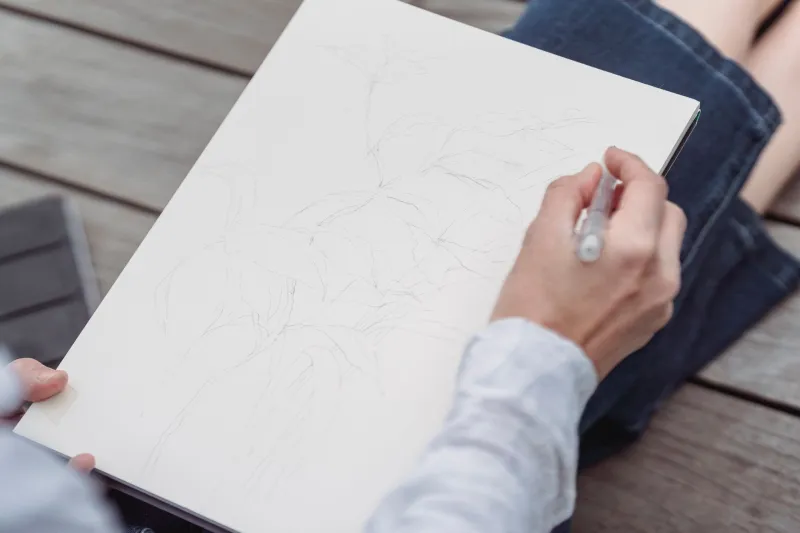
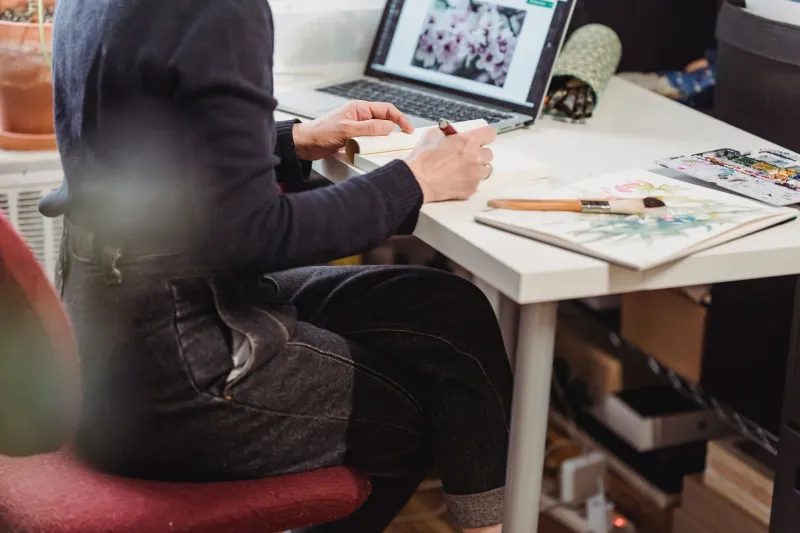
Let's say you're a visual artist working on a new series. You start sharing your process — sketches, color tests, studio snapshots. Your audience responds. People are invested. And then you hit a wall. The direction you've been heading doesn't feel right anymore. You want to scrap two months of work and start over.
In a vacuum, that's a completely valid creative instinct. Happens all the time. Good work often requires that kind of brutal honesty with yourself.
But now you have 4,000 people who've watched you build this thing. You've posted about it seventeen times. You've talked about the vision. Scrapping it means explaining yourself, managing the narrative, potentially disappointing people who were looking forward to seeing it come together.
So you don't scrap it. You keep going. You finish something you don't actually believe in, because the social cost of pivoting feels too high.
That's the performance tax. And it compounds over time.
Safer Choices, Slower Growth
One of the less-discussed side effects of over-documenting your creative work is that it tends to push you toward safer territory. Not because you're consciously playing it safe, but because the things that are easiest to share — visually clean, narratively tidy, emotionally legible — are also the things least likely to challenge you.
Experimentation is awkward to document. Failure is uncomfortable to post about even when you frame it as a 'learning moment.' Work that exists in a genuinely uncertain space doesn't make for satisfying process content.
So slowly, without meaning to, your creative practice starts self-editing toward the shareable. You end up doing work that looks like growth without necessarily being growth.
How to Know If This Is Happening to You
A few honest questions worth sitting with:
- Do you feel a low-level anxiety when you're working on something you haven't posted about yet?
- Have you ever made a creative decision — color, direction, subject matter, medium — partly because it would be easier to explain online?
- When a project stalls, does your first instinct involve figuring out what to post about it?
- Do you feel more motivated by the documentation than by the work itself?
One 'yes' doesn't mean you're in trouble. But if most of these landed, it might be worth examining how much of your creative energy is going toward the work versus the story you're telling about the work.
Reclaiming the Private Process
The fix isn't to disappear entirely or swear off sharing. For a lot of creatives, the audience relationship is meaningful, financially necessary, or both. This isn't an argument for secrecy.
It's an argument for intentional withholding.
Some work needs to be private long enough to become itself. That might mean starting a project with a personal rule: nothing gets shared until it's done, or until you've hit a specific milestone that isn't contingent on audience response. It might mean keeping a separate, undocumented sketchbook or folder where you're allowed to be genuinely bad, genuinely confused, and genuinely experimental without any narrative pressure.
It might also mean getting honest about which parts of your process actually benefit from external input and which parts get contaminated by it. Early ideation? Probably better kept close. Feedback on a near-finished piece? That's when outside eyes can actually help.
The Work Doesn't Owe Anyone a Story
There's a cultural assumption baked into the creator economy that everything is content, that your process is inherently interesting to others, and that sharing it is always a net positive. That assumption deserves some pushback.
Your creative process doesn't have to be legible to anyone else. It doesn't have to be inspiring or relatable or aesthetically coherent. Some of the most important things that happen in a creative practice are deeply private — the weird obsessions, the failed experiments, the long stretches of nothing that eventually crack open into something real.
Documenting all of that doesn't preserve it. Sometimes it prevents it.
Transparency is a tool, not a virtue. The question worth asking isn't should I share this? — it's who does sharing this actually serve? When the honest answer is 'the work,' go ahead. When the honest answer is 'my follower count,' maybe sit with it a little longer first.