What Your Half-Finished Work Is Actually Saying About You
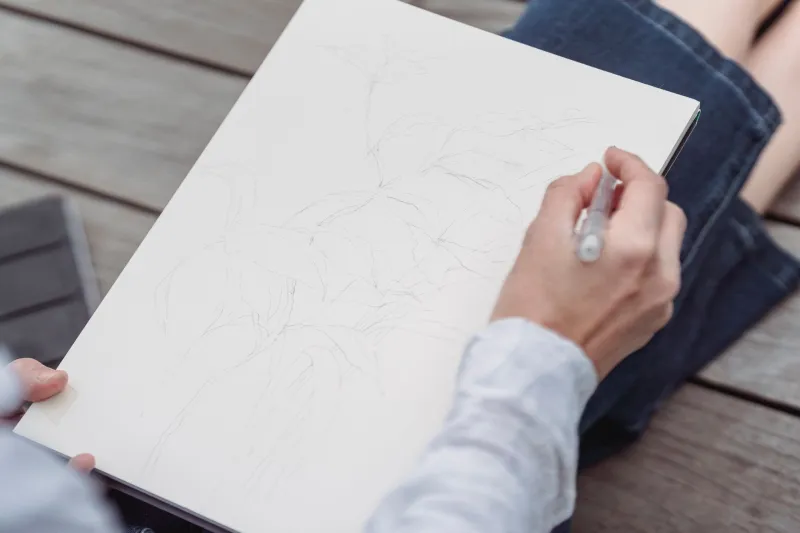
There's a sketchbook on your shelf you haven't touched in eight months. A Google Doc with forty-three lines and then nothing. A canvas that got as far as the underpainting before you decided it wasn't going anywhere. You probably think of these things as evidence of something — procrastination, self-doubt, a lack of follow-through. The creative graveyard, you might call it, half-joking.
But here's a question worth sitting with: what if those pieces aren't failures at all? What if stopping was the point?
The Pressure to Wrap Everything Up Neatly
American culture has a complicated relationship with the unfinished. We're a country that likes conclusions — three-act structures, season finales, before-and-after photos. There's enormous social pressure, especially for anyone building a creative career or personal brand, to show only the polished end result. The finished painting. The published essay. The launched product. Everything else gets tucked away like it's shameful.
This obsession with completion shapes how we judge our own creative output in ways that aren't always fair. We look at a half-formed idea and immediately ask, why didn't I finish this? instead of asking, what does this tell me about where I was when I made it?
The finished version of something is often the most edited, most self-conscious version. It's been through rounds of second-guessing. It's had its rough edges sanded down to meet an imagined audience's expectations. The unfinished version? That's often where the realest thinking happened.
What Art History Actually Shows Us
This isn't just a feel-good reframe. There's genuine precedent for the idea that incompleteness carries its own power.
Michelangelo's Prisoners — a series of figures that appear to be struggling to emerge from raw marble — were never completed. For centuries, scholars debated whether that was intentional or not. Today, many argue the unfinished state is exactly what makes them so viscerally affecting. You see the effort. You feel the tension. A polished, finished sculpture might have said less.
Franz Schubert's Unfinished Symphony has two movements instead of the expected four. Nobody knows exactly why he stopped. But it's one of the most performed symphonies in the classical repertoire, and part of its emotional weight comes from that sense of incompletion — the feeling that something is still reaching, still unresolved.
More recently, contemporary artists have deliberately leaned into the unresolved as a statement. Installation art, in particular, often refuses to give viewers a tidy takeaway. The ambiguity is the work.
The Psychology of Stopping
So why do we stop? That's a more layered question than it sounds.
Sometimes we stop because the work has done what it needed to do for us emotionally, even if it hasn't reached a state we'd call shareable. A journal entry that trails off mid-sentence. A song that only exists in a voice memo on your phone. These things served a purpose in the moment they were created — they processed something, explored something, helped you figure out what you thought.
Other times, we stop because the work scared us. We got close to something real, something that felt too exposed or too strange, and we backed away. That's worth examining, because those are often the pieces that had the most to say.
And sometimes — honestly — we stop because life interrupted, and the moment passed. The energy that was animating a particular idea dissipated. That's not failure either. That's just how creative work moves through time.
Reframing the Archive
Here's a practical suggestion: stop calling it a graveyard.
Call it an archive instead. Because that's actually what it is — a record of your thinking, your preoccupations, your aesthetic instincts across time. Looked at that way, your incomplete work isn't a collection of things you didn't finish. It's a map of where your mind has traveled.
Some of the most interesting creative people keep what they call a fragments file — a document or folder where half-ideas live without pressure to become anything more. Every few months, they revisit it. Sometimes something clicks into place and a fragment becomes the seed of a finished piece. But just as often, the fragment stays a fragment, and that's fine. Its value was in the thinking it captured, not in some eventual product.
You might try something similar. Pull out one unfinished thing — just one — and look at it without the lens of failure. Ask: what was I interested in here? What was I trying to figure out? What does this tell me about the version of myself who started it?
The Deliberate Incompleteness Move
There's also a more intentional angle worth considering: sharing incomplete work on purpose.
This runs counter to every piece of personal brand advice you've probably read. You're supposed to curate, polish, present your best self. But there's a growing conversation among artists and creators about the value of showing process — not just the pretty process shots, but the actual messy, uncertain, unresolved process.
When you share something incomplete and label it honestly — this is a draft, I don't know where it's going, I'm posting it anyway — you give your audience something most curated content doesn't: an invitation into the actual experience of making things. And that's often more connecting than a finished piece that looks like it arrived fully formed.
It also reframes the relationship between creator and audience. Instead of presenting yourself as someone who has figured it all out, you're saying: I'm working through something, and you're welcome to witness that. For a lot of people, that honesty is exactly what they needed to see.
You're Allowed to Leave Things Open
There's no rule that says every creative idea has to resolve into a finished, shareable, sellable thing. Some ideas are just for you. Some work exists to teach you something, not to become a product. Some pieces are doing their job right now, sitting half-finished in a drawer, waiting for a version of you that hasn't arrived yet.
The cultural pressure to finish everything, to always be producing, to never let anything sit unresolved — that pressure is real, but it's not a law. You get to decide what counts as complete. You get to decide what's worth showing and what's worth keeping private and what's worth leaving exactly as it is.
Your incomplete work isn't a confession of inadequacy. It's evidence that you've been thinking, feeling, reaching, experimenting. That's not a failure mode. That's just what being a creative person looks like from the inside.